What Is a Compensation Package? A Complete Guide

A compensation package is defined as the total value an employer provides to an employee, combining direct pay and indirect benefits into one complete offer. Most job seekers focus on base salary alone, but that number rarely tells the full story. A well-structured remuneration package includes bonuses, health insurance, retirement contributions, paid time off, and perks that can add significant value beyond the paycheck. Understanding what is a compensation package in its entirety gives you real negotiating power and helps you compare offers accurately.
What is a compensation package and why does it matter?
A compensation package is the total value proposition an employee receives, made up of direct compensation and indirect compensation. Direct compensation covers the money you see on your paycheck. Indirect compensation covers everything else your employer funds on your behalf.
The standard formula is straightforward: Total Compensation = Base Salary + Bonuses/Commissions + Benefits + Perks. That formula matters because two job offers with identical base salaries can differ by tens of thousands of dollars in total value once benefits are factored in. Knowing this formula before you accept any offer is the difference between a good decision and a costly one.

Remuneration package is the formal industry term for this concept, used widely in HR, legal, and finance contexts. You will see “compensation package” and “remuneration package” used interchangeably across job postings and employment contracts. Both terms refer to the same thing: the complete financial and non-financial reward an employer provides.
What are the main components of a compensation package?
Compensation components fall into two clear categories: direct and indirect. Direct compensation includes base salary, overtime pay, merit pay, commissions, and performance bonuses. These are the figures that appear on your offer letter and your W-2.
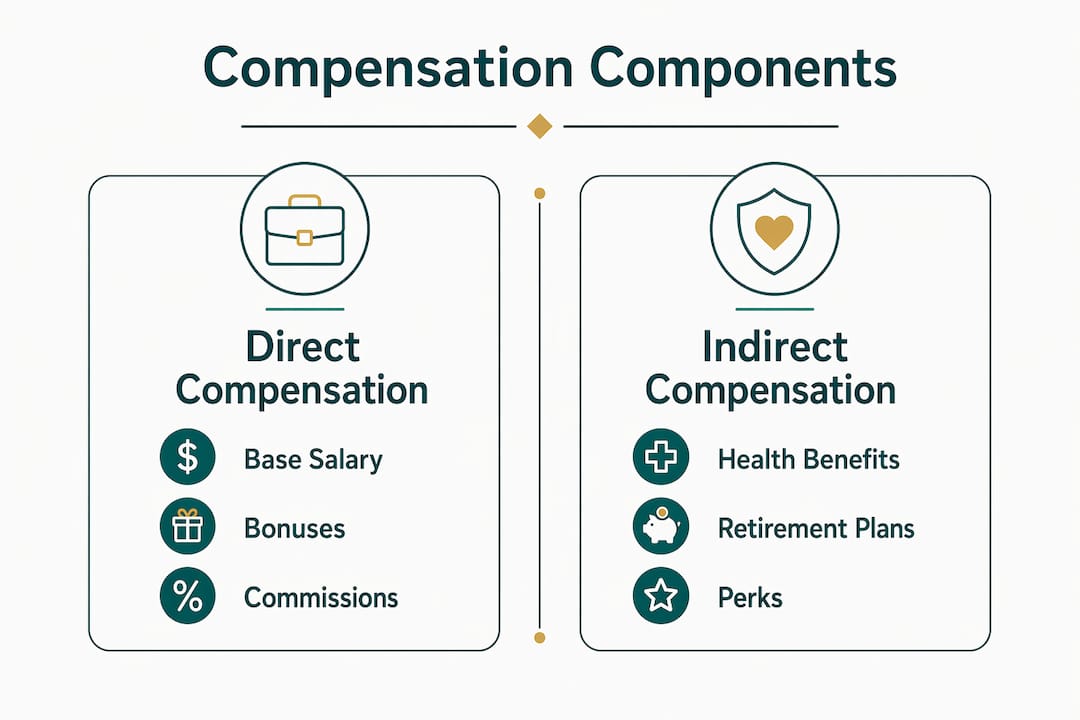
Indirect compensation is where most professionals underestimate their package’s true worth. This category includes health, dental, and vision insurance; employer retirement plan contributions; paid time off; equity or stock options; tuition reimbursement; gym memberships; and remote work stipends. Indirect benefits may add 20–30% or more to total package value beyond base salary. That percentage represents real money you would otherwise pay out of pocket.
| Component | Category | Example |
|---|---|---|
| Base salary | Direct | $75,000 annual fixed pay |
| Performance bonus | Direct | 10% of salary on target |
| Health insurance | Indirect | Employer-paid premium |
| 401(k) match | Indirect | 4% employer match |
| Paid time off | Indirect | 15 days per year |
| Equity/stock options | Indirect | Vesting over 4 years |
| Tuition reimbursement | Indirect | Up to $5,250 per year |
| Remote work stipend | Indirect | $100/month internet allowance |
Pro Tip: Add up the annual dollar value of every indirect benefit before comparing two offers. Employer-paid health insurance alone can be worth $6,000–$15,000 per year, depending on the plan and coverage level.
How is the total value of a compensation package calculated?
Calculating total remuneration requires adding every component to arrive at one annual number. Calculating total remuneration means summing base pay, bonuses, the dollar value of health and retirement benefits, and any perks with a clear monetary value. Here is a practical example:
- Base salary: $80,000
- Annual performance bonus (10%): $8,000
- Employer health insurance premium: $7,200
- 401(k) employer match (4%): $3,200
- Paid time off (15 days at daily rate): $4,615
- Remote work stipend ($100/month): $1,200
Total annual compensation: $104,215
That gap between $80,000 and $104,215 is not trivial. It represents a 30% difference from base salary alone. Employers increasingly issue Total Rewards Statements to communicate this full picture to employees. Total Rewards Statements improve employee retention and satisfaction by making the employer’s full investment visible.
One critical detail: employer-paid taxes, insurance, and statutory obligations add further cost on top of what you see. Mandatory employer contributions vary by country and can add 15–40% over base salary in global hiring scenarios. This means a $100,000 package in the United States costs an employer significantly more than $100,000 to fund.
Pro Tip: Ask your HR department for a Total Rewards Statement if one is not provided automatically. It gives you a documented breakdown of every dollar your employer spends on your behalf.
Why transparency in your remuneration package matters
Transparency in compensation is not just a trend. It is a practical tool that directly affects your career decisions and negotiating position. Employers who communicate the full value of their packages clearly see measurable improvements in retention and employee satisfaction.
For job seekers, transparency works in both directions. You need to ask detailed questions about every component before signing an offer. The questions that matter most include:
- Does the quoted salary figure include or exclude employer statutory contributions?
- Is the bonus guaranteed or performance-dependent?
- When does equity vest, and what triggers acceleration?
- Are benefits fully employer-paid or split with the employee?
- What is the employer’s contribution rate to the retirement plan?
Global and cross-border roles add another layer of complexity. Employer-paid burdens like taxes and pension contributions vary between countries, making total package figures non-comparable without context. A $120,000 package in one country may represent a very different employer cost than the same figure in another.
“High-value benefits may offer more stability than higher salaries with slim benefits.” This principle holds especially true in volatile industries where base salaries fluctuate but benefit structures remain consistent.
Statutory obligations are also part of the picture. Social Security contributions, Medicare, unemployment insurance, and workers’ compensation are costs your employer pays that never appear on your paycheck but form part of why job offers vary across companies and regions.
Common misconceptions and negotiation tips
The most damaging misconception about remuneration packages is that compensation equals salary. Comparing job offers based only on base salary ignores indirect compensation that can account for 20–30% of total value. A job paying $5,000 less per year but offering full health coverage, a strong 401(k) match, and generous paid time off is frequently the better financial choice.
A second misconception is that benefits are fixed and non-negotiable. Many employers have flexibility on signing bonuses, remote work stipends, additional vacation days, and professional development budgets even when base salary is capped. Knowing which components are negotiable gives you more options at the table.
A third area of confusion involves package figures and statutory contributions. Compensation package figures can be stated as inclusive or exclusive of statutory contributions like retirement plan mandates, which directly affects the real value of the offer. Always clarify this before negotiating.
Practical strategies for negotiating your full package:
- Request a written breakdown of every component before your final negotiation conversation.
- Calculate the annual dollar value of each benefit so you can trade components intelligently.
- Anchor your negotiation on total compensation, not just base salary.
- Confirm whether the bonus is discretionary or contractually guaranteed.
- Ask about review cycles: knowing when your next salary review occurs is part of evaluating the offer.
Pro Tip: When an employer says the salary is firm, shift the conversation to signing bonuses, extra vacation days, or a remote work stipend. These are often easier to approve and still add real value to your total package.
Key Takeaways
A compensation package is always more than its base salary, and the professionals who understand that distinction negotiate from a position of real knowledge.
| Point | Details |
|---|---|
| Total compensation formula | Add base salary, bonuses, benefits, and perks to get the true annual value. |
| Indirect benefits add real value | Benefits can add 20–30% or more beyond base salary in total package value. |
| Always clarify statutory inclusions | Confirm whether package figures include or exclude mandatory employer contributions. |
| Negotiate beyond base salary | Signing bonuses, extra PTO, and stipends are often negotiable even when salary is fixed. |
| Request a Total Rewards Statement | This document makes every employer dollar visible and strengthens your negotiating position. |
My take on treating compensation as an annual audit
I have reviewed hundreds of job offers over the years, and the pattern is consistent: professionals who focus only on base salary leave money on the table. The ones who treat their compensation package as an annual investment audit, reviewing every component for its dollar value and strategic fit, consistently come out ahead.
Different industries structure packages very differently. Tech companies often front-load equity and keep base salaries moderate. Healthcare employers tend to offer strong retirement contributions and generous paid time off. Financial services firms lean heavily on performance bonuses that can dwarf base pay. Knowing your industry’s norms before you negotiate is as important as knowing your market rate.
The advice I give most often is this: never accept or reject an offer based on one number. Build a simple spreadsheet, assign a dollar value to every component, and compare the totals. You will frequently find that the lower-salary offer is the better financial decision once the full picture is visible. Long-term financial stability comes from the full package, not the headline figure.
— Obinna
Salary data that puts your package in context
Understanding your compensation package is only half the work. The other half is knowing whether what you are being offered is competitive for your role, experience level, and location.
Fairpayguide gives you access to real salary data across hundreds of professions and markets worldwide. Use the salary lookup tool to benchmark your current or prospective package against verified market ranges. You can also submit your salary anonymously to help build the community data that makes these comparisons possible. When you know what the market actually pays, you walk into every negotiation with facts, not guesses.
FAQ
What does a compensation package include?
A compensation package includes base salary, bonuses, commissions, health insurance, retirement plan contributions, paid time off, equity, and perks like remote work stipends or tuition reimbursement. The total value is always higher than the base salary figure alone.
What is the difference between salary and a remuneration package?
Salary is the fixed annual pay component. A remuneration package is the complete total, including salary plus all direct and indirect benefits an employer provides.
How do I calculate the total value of my compensation package?
Add your base salary, expected bonuses, the annual dollar value of employer-paid benefits, and any perks with a clear monetary value. The sum is your total annual compensation.
Should I negotiate benefits as well as salary?
Yes. Benefits like signing bonuses, extra vacation days, remote work stipends, and professional development budgets are frequently negotiable even when base salary is fixed.
What is a Total Rewards Statement?
A Total Rewards Statement is a document employers provide that itemizes every component of your compensation package in dollar terms. It makes the employer’s full investment in you visible and is a useful tool for evaluating and negotiating offers.